Home › Services
Septic tank pumping in Knoxville TN, done with the lid open and the eyes open
Septic pumping around Knoxville is the cheapest protective habit a homeowner on a tank can keep, and it is also the visit most people forget until a toilet gurgles. A pump-out removes the solids your tank has been holding back so they never reach the soil behind it. Done well, it is also a short look at the health of the whole system: the baffles, the filter, the level of liquid, and whether anything is flowing the wrong way. This page explains how a tank works, how the interval gets set, how lids are found and raised, what the person on the hose should be checking, and what you can do between visits to stretch the time before the next one.
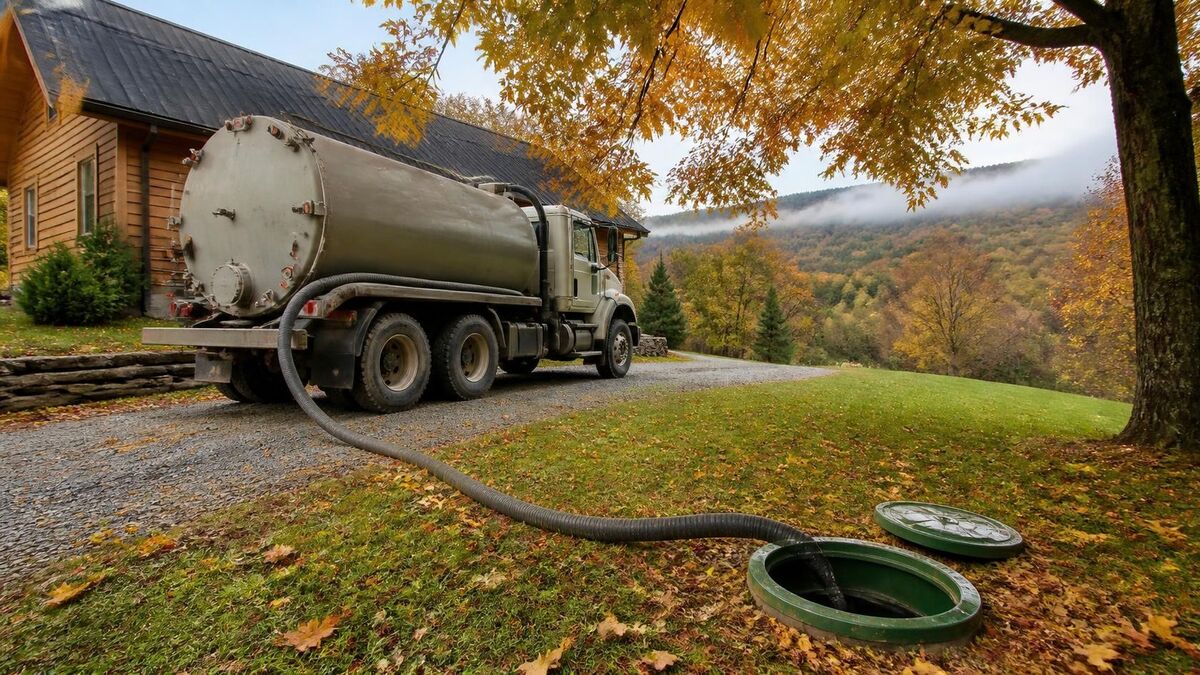
How a septic tank sorts what leaves your house
Everything from your toilets, sinks, tub and washer flows by gravity through one building sewer into the tank. Once it slows down inside that big box, it splits into three layers. Grease, soap residue and anything lighter than water float to the top and knit together into a mat called scum. Heavy solids sink to the floor and become sludge, which bacteria break down slowly but never completely. Between them sits a band of fairly clear liquid called effluent, and that middle band is the only thing that is supposed to leave.
The tank does its job by holding wastewater long enough for that separation to happen. As sludge builds from the bottom and scum thickens from the top, the clear zone gets thinner, the water passes through faster, and more fine solids ride out with the effluent. Those solids clog soil. A working tank is always full to its outlet; you pump because the solids have eaten into the space it needs to settle anything.
What sets the right pumping interval for your household
There is no single calendar number that fits every home. Every three to five years is a common place to start the conversation, but the honest answer comes from measuring how much sludge and scum your own tank has built since the last visit. The factors below push that interval shorter or longer.
- Tank size. A larger tank holds more solids before the clear zone shrinks too far. Many older East Tennessee homes have smaller tanks than a modern design would call for.
- Number of people. Solids accumulate roughly with the number of people using the house, so a family of five fills a tank far faster than a retired couple.
- Garbage disposal. Ground food adds solids the tank was never sized to handle and can noticeably shorten the time between pump-outs.
- Water use. Long showers, leaking toilet flappers, a softener backwashing into the tank, or several loads of laundry in one day all push water through faster and stir up the layers.
- What goes down. Grease, wipes and harsh cleaners speed scum and slow bacteria.
- Guests and rentals. A house that fills up on weekends, common near Norris Lake and around the Sevier County cabins, loads a tank in bursts rather than evenly.
Finding the lids before the truck shows up
The single biggest time sink on a pumping visit is hunting for the tank. In older Knox and Anderson County homes the lids are often buried somewhere between a few inches and a couple of feet down, under turf that has been mowed over for decades. Start with what you have: a county permit record or system drawing if one exists, a note from a previous sale, or a mark someone scratched on a basement wall where the sewer line leaves the house.
If none of that turns up, the building sewer is the best clue. Tanks usually sit a short distance out from where that pipe exits the foundation, in line with it. A probing rod pushed gently into the ground will hit the concrete top. If you plan to dig yourself, call 811 first so buried utilities get marked, and leave the actual lid lifting to someone with the right tools, since concrete lids are heavy and an open tank is dangerous to fall into.
Why risers are worth adding at the next pump-out
A riser is a short tube of plastic or concrete set on top of the tank opening and brought up to grade, capped with a secured lid you can see in the yard. With risers in place, every future pump-out starts with unscrewing a cover instead of digging a hole, which saves labor on each visit and removes the excuse for putting the job off.
Risers matter for more than convenience. A tank opening that can be reached easily gets the inlet and outlet both looked at, rather than just whichever side was quickest to uncover. They should go on both compartments of a two-chamber tank and over any effluent filter. Its lid should seal and lock or screw down so a child cannot open it.
What a careful pumper looks at while the tank is open
Pumping is one of the few moments anyone actually sees inside your system, so it should never be a suck-and-go job. These are the things worth asking about before the lid goes back on.
- Liquid level before pumping. A tank sitting well above its outlet suggests effluent is not leaving freely, which can point downstream. A level below the outlet can mean a leak in the tank wall.
- Sludge and scum depth. Measured with a stick or a sludge judge before pumping, these numbers tell you whether your interval is about right, too long or too short.
- Inlet baffle. This fitting directs incoming waste down into the tank instead of across the top. Missing or crumbling inlet baffles are common in older concrete tanks.
- Outlet baffle or tee. This holds scum back from the line to the field. If it is broken, floating solids can pass straight out.
- Effluent filter. If one is present it should be pulled, hosed back into the tank and reinstalled. A heavily clogged filter is a sign of solids carryover.
- Backflow. Liquid running back into the tank from the outlet side after the level drops is a sign the line or field ahead is saturated, and that is worth noting in writing.
- Tank condition. Cracks, exposed rebar, roots entering at joints and a crumbling lid all deserve a mention even if nothing gets fixed that day.
How a typical pump-out visit runs from start to finish
The steps are similar wherever you live, though access and lid depth change how long each one takes.
- The tank is located and every compartment opening is exposed, along with the filter access if the system has one.
- Liquid level, sludge depth and scum depth are noted before anything is removed.
- The vacuum hose goes in through the main opening, and the scum mat is broken up so it comes out with the liquid rather than sticking to the walls.
- Sludge on the floor is loosened, sometimes by backflushing a little liquid into the tank, so the bottom is cleared rather than just the top few feet.
- Baffles, the filter and the tank interior are looked over once the tank is down, when cracks and missing fittings are easiest to see.
- Lids or risers are closed and secured, disturbed soil is put back, and you get a written record of what was found.
Warning signs that your tank is past due
Slow drains throughout the house rather than at one fixture, gurgling in the tub when the toilet flushes, a sewage odor near the tank lid, or water backing up into the lowest drain after a load of laundry all suggest the tank is crowded. Wet ground or bright green strips beyond the tank point further downstream, and those are covered on the drain field repair page.
If wastewater is surfacing in the yard or backing into the house, keep children and pets away from it, since raw sewage is a real health hazard, and cut water use until someone has looked.
What your drains should and should not carry
A tank lasts longer, and the pump-out interval stretches, when the only things entering it are human waste, toilet paper and ordinary household water. The short list of trouble items is worth taping inside a cabinet door.
- Wipes of any kind, including those labeled flushable. They do not break down in a tank and wrap around baffles and pumps.
- Cooking grease and fat. They thicken the scum mat quickly and can coat the outlet.
- Coffee grounds, eggshells and food scraps, with or without a disposal.
- Paint, solvents, pesticides and large amounts of bleach or drain cleaner, which harm the bacteria that digest sludge.
- Medications, cat litter, cigarette butts, dental floss and feminine products.
- Water softener backwash and sump pump discharge, which add volume the tank does not need.
- Additives sold as a substitute for pumping. The evidence for them is weak, and nothing poured in removes the inert solids on the tank floor.
Keeping a record so the next visit is quicker and cheaper
A one-page log saves money every time the system needs attention. Write down the date of each pump-out, who did it, the sludge and scum depths if they were measured, the condition of each baffle and the filter, and any repair recommended. Sketch the lid locations with measurements from two house corners.
That record does three jobs. It tells you whether your interval is drifting shorter, which can be an early signal of trouble. It lets the next pumper go straight to the lids. And when you sell, it gives a buyer and their inspector a history to work from, which is covered further on the septic inspections page.
What changes the cost of a septic pump-out
No two visits are priced alike, and the contractor sets the figure after seeing the site or hearing the details. The main drivers are the size of the tank and the number of compartments, how deep the lids are buried and whether risers exist, how far the truck has to park from the tank and whether the hose has to climb a slope or cross a long yard, how thick the sludge has become after years without service, and whether the filter or baffles need attention while the tank is open.
If you are not sure what you have, send the address and what you know about the system, and a septic contractor working the region can tell you what the job involves. Service communities are listed on the areas we cover page.
Septic Tank Pumping: questions people ask
How do I know when my septic tank needs to be pumped?
The most reliable way is a measurement, not a guess. A pumper or inspector can check how thick the sludge on the bottom and the scum on top have become compared with the depth of the tank. When those layers take up a large share of the space, it is time. If you have no record at all, assume it is due, have it pumped, and ask for the depths so you have a baseline to plan the following visit around.
Can you pump a septic tank too often?
Pumping early does no real harm to the tank, but it can mean paying for visits you did not need. The more common problem is the opposite: waiting so long that solids escape toward the soil. If your tank is being pumped every year or two and the sludge reading is still low each time, the interval can usually be stretched with the contractor's input.
Should I be home when the septic tank is pumped?
It helps, especially the first time. You can point out where you think the lids are, unlock a gate, and hear firsthand what was found inside the tank. If you cannot be there, ask for photos of each opening and a written note of sludge depth, baffle condition and anything that looked off.
Is it safe to use the toilet and shower right after the septic tank is pumped?
Yes. The tank starts refilling as soon as you run water, and normal use is fine. It will take some days or weeks to return to its working level, depending on how much water the household uses. There is no need to add yeast, bacteria or any product to restart it; ordinary household waste brings in everything the tank needs.
Why does my yard smell like sewage after rain?
Odor after heavy rain can come from a few places. A lid or riser that is not sealed lets gases escape near the tank. Saturated soil can slow or stop effluent from leaving, so the tank and line back up. A plumbing vent on the roof can also push odor down on still, humid days. If the smell sits near the tank, check that lids are tight and ask for the liquid level to be looked at the next time the tank is open.
Does a two-compartment septic tank need both sides pumped?
In most cases, yes. The first compartment catches the bulk of the solids, but the second one still collects finer material and its own scum layer over time. Pumping only the first side leaves sludge sitting right next to the outlet. Ask that both openings be exposed and both compartments be emptied, and if the second side has no access, a riser over it is a sensible addition.
What should I do if I cannot find my septic tank lid?
Look for the spot where the main sewer pipe leaves your foundation, usually in a crawlspace or basement, and follow that line outward. Check any county permit file or paperwork from your purchase. Call 811 before digging, and if probing does not turn it up, a contractor with a line-tracing transmitter can usually find it.
Talk through your site
Start with the address, what you want done, and a few photographs of the area, including anywhere water sits after a heavy rain.
Related work
Septic Inspections
Inspections for home sales, refinances and routine checkups: what a real inspection looks at and what it cannot see.
Septic Repair
Baffles, lids, risers, pipes, pumps and alarms: the failures that can be fixed without replacing the system.
Drain Field Repair
Wet spots, slow drains and odors from a failing field, and the options from rest to rebuild.
New Septic Systems
New and replacement systems: soil evaluation, permits, conventional and alternative designs on East Tennessee ground.
Across the metro
Powell
North Knox County homes on hilly lots, older systems and a mix of sewer and septic streets.
Halls
Halls Crossroads ridges and hollows, rocky soil, and systems tucked into sloped back yards.
Seymour
Fast-growing ground between Knoxville and the Smokies, much of it on septic, much of it new.
Clinton
Anderson County homes on clay and limestone, lake-area lots and older rural systems.